Science Museum Plasma Lamp
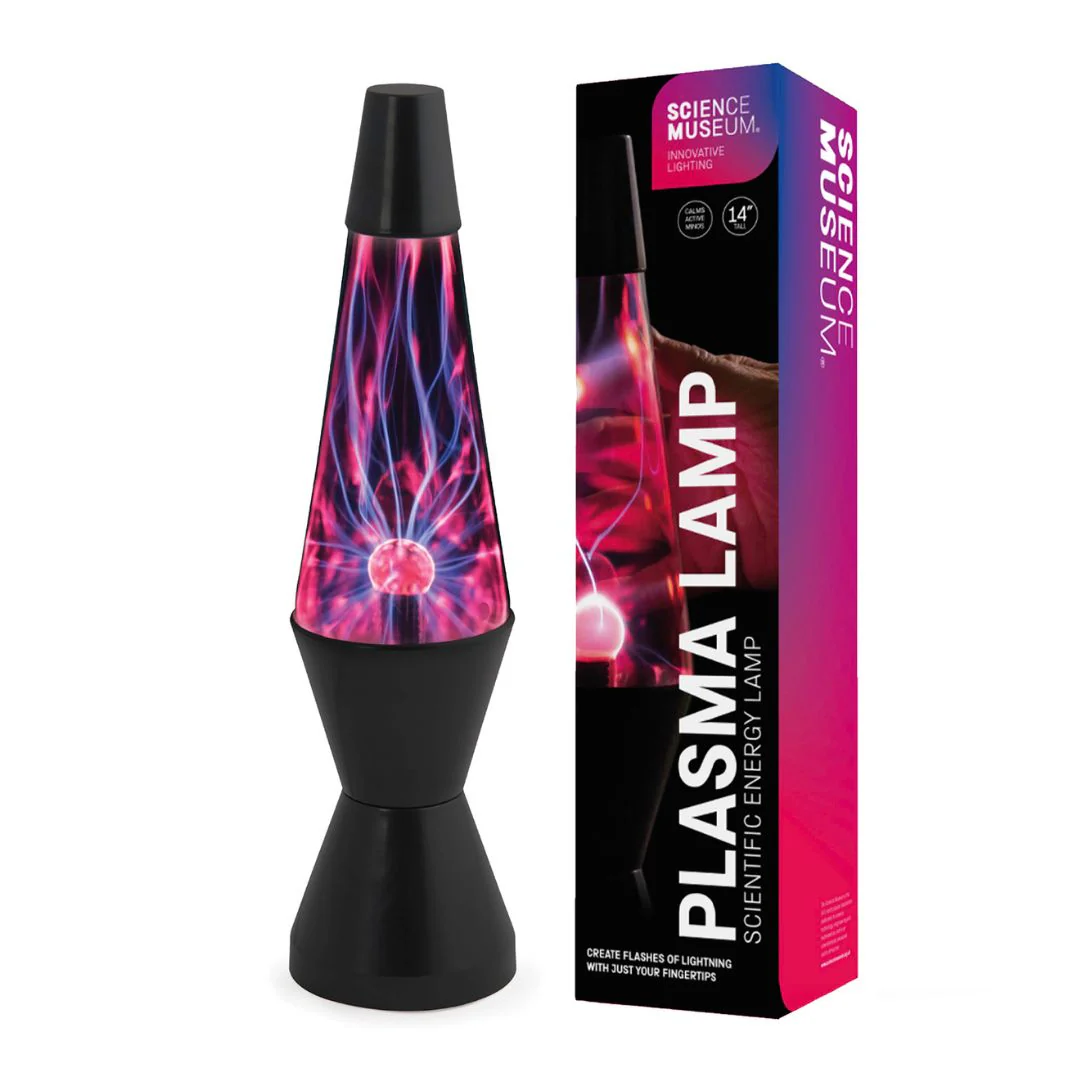
Create flashes of lightning with just your fingertips! The Science Museum Plasma Lamp is a scientific energy lamp, based on a form of Tesla Coil and housed in a contemporary lamp shape for modern home décor.
Tiny plasma filaments branch out from the central electrode to where you touch the glass creating fascinating beams of coloured light. It also reacts to sound, creating a mesmerising display to music.
Part of the Science Museum innovative lighting range.
---Full Product Description---
Promotes STEM learning. The plasma lamp is a form of Tesla Coil. The glass sphere has most of its air replaced with 3 noble gases - typically Neon, Argon and Xenon - and an alternating current electrode is placed at the centre.
When voltage is applied, plasma filaments extend from the electrode and flow towards the outer glass insulator in a bid to reach the earth. If a fingertip is placed on the glass the energy moves toward it, because the human body provides a more conductive discharge path.
Original: $47.20
-65%$47.20
$16.52Product Information
Product Information
Shipping & Returns
Shipping & Returns
Description
Create flashes of lightning with just your fingertips! The Science Museum Plasma Lamp is a scientific energy lamp, based on a form of Tesla Coil and housed in a contemporary lamp shape for modern home décor.
Tiny plasma filaments branch out from the central electrode to where you touch the glass creating fascinating beams of coloured light. It also reacts to sound, creating a mesmerising display to music.
Part of the Science Museum innovative lighting range.
---Full Product Description---
Promotes STEM learning. The plasma lamp is a form of Tesla Coil. The glass sphere has most of its air replaced with 3 noble gases - typically Neon, Argon and Xenon - and an alternating current electrode is placed at the centre.
When voltage is applied, plasma filaments extend from the electrode and flow towards the outer glass insulator in a bid to reach the earth. If a fingertip is placed on the glass the energy moves toward it, because the human body provides a more conductive discharge path.